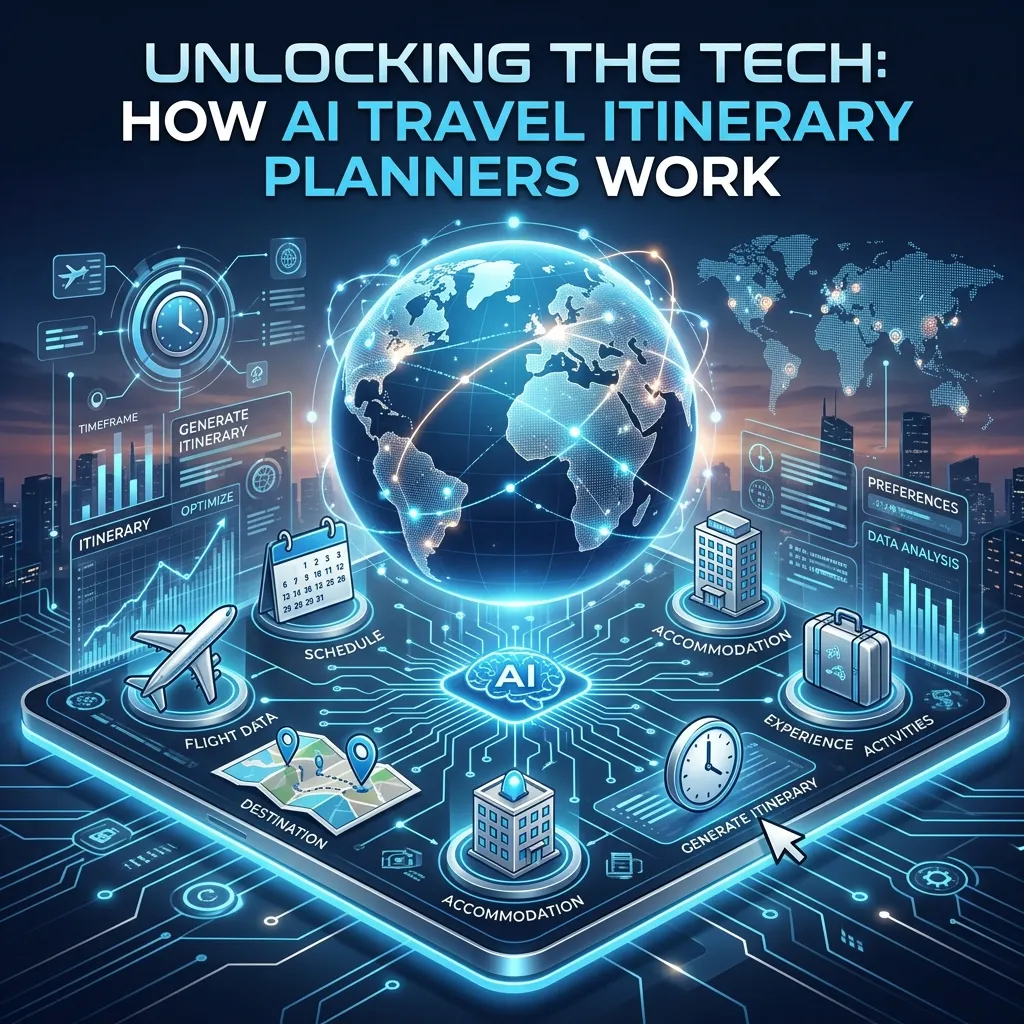
Artificial intelligence now builds flawless vacations in seconds. You will discover exactly how these sophisticated systems process vast datasets to generate highly personalized, seamless travel schedules instantly.
These intelligent systems combine natural language processing with complex machine learning algorithms to understand your specific travel preferences. By instantly pulling travel data integration feeds like live pricing and authentic reviews, they craft customized journeys that save travelers countless hours of stressful planning.
What Are the Core Mechanics Driving AI Travel Itinerary Planners?
To understand how AI travel itinerary planners work, you must look at the foundational technologies powering them. These platforms rely heavily on a combination of sophisticated algorithms to translate human desires into concrete logistics.
How Do Natural Language Processing and Machine Learning Operate?

Natural language processing serves as the critical bridge between human communication and computer logic. When you type “I want a relaxing beach holiday in Greece under $2000,” the NLP engine dissects this sentence. It identifies the intent (vacation), the destination (Greece), the vibe (relaxing beach), and the constraint (budget).
Simultaneously, machine learning models jump into action. These models draw upon massive repositories of historical booking data. According to McKinsey & Company, companies utilizing advanced machine learning can predict consumer behavior with unprecedented accuracy. The system compares your parsed request against millions of previously successful trips. It uses predictive analytics to determine which specific islands, hotels, and flight routes historically satisfied similar users. Because these models constantly learn from new inputs, the recommendations become sharper and more accurate with every generated trip.
How Do These Tools Handle Data Integration for Real-Time Accuracy?
The best algorithm in the world fails if it suggests a fully booked hotel or a canceled flight. Consequently, these planners rely on constant data synchronization with global distribution systems.
Why Are Real-Time Pricing, Availability, and Reviews Crucial?
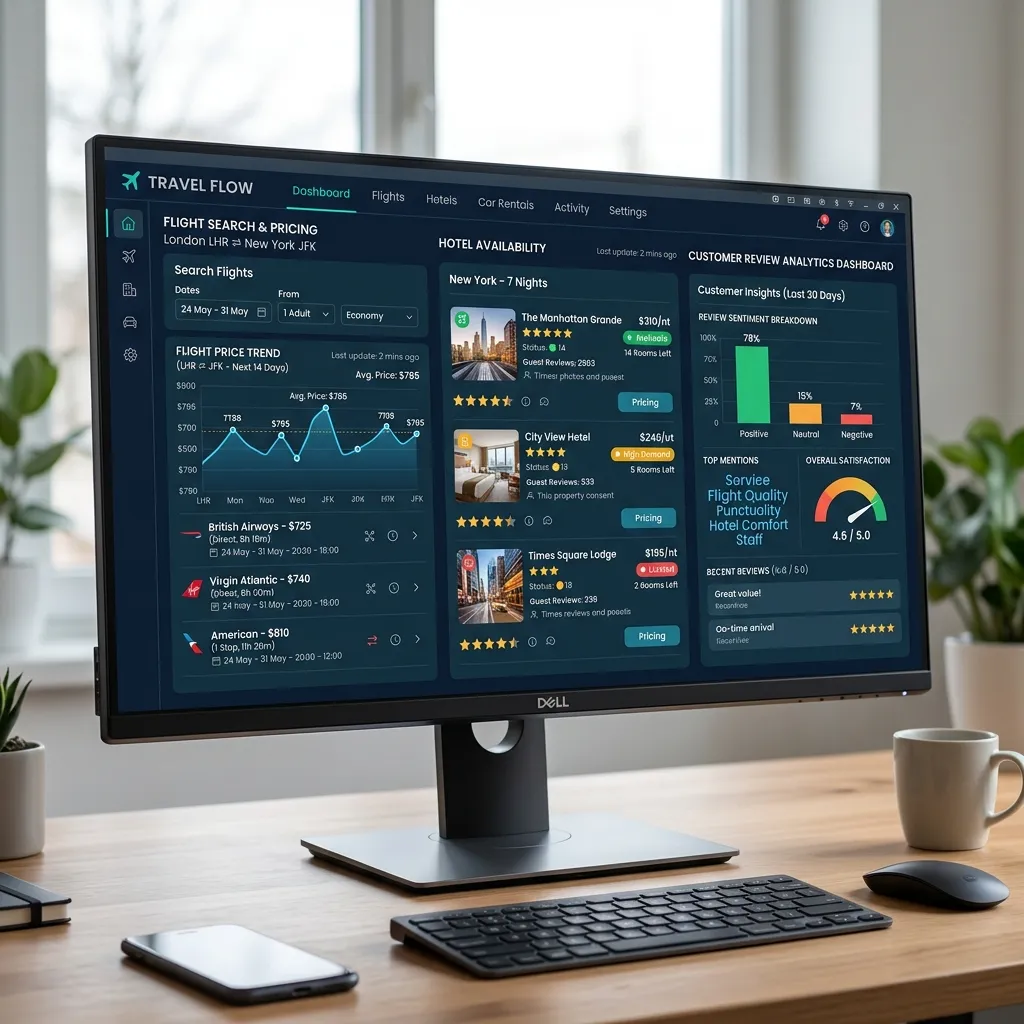
AI platforms ingest live feeds via Application Programming Interfaces (APIs) connected to airlines, hotel chains, and local tour operators. This constant travel data integration guarantees that the planner only recommends viable options.
The system constantly monitors dynamic pricing fluctuations. Airlines and hotels adjust their prices second by second based on supply and demand. By pulling this live data, the tool optimizes your budget in real-time. Furthermore, the AI scans thousands of user reviews instantly using sentiment analysis. Instead of making you read 400 reviews of a local restaurant, the system aggregates the data and confirms whether recent travelers actually enjoyed the food, factoring this directly into its final recommendation. Industry analysts at Skift frequently note that seamless API integration separates functional travel platforms from frustrating ones.
How Do Personalization Algorithms Tailor the Experience to the Traveler?
Generic itineraries bore modern travelers. Consequently, personalization engines work tirelessly to ensure your schedule looks completely different from another user heading to the same city.
These algorithms weigh your explicit inputs against implicit behavioral data. If you specify a preference for vegan food and modern art, the system prioritizes neighborhoods known for plant-based cafes and contemporary galleries. It uses user preference algorithms to map geographical proximity, ensuring you do not waste three hours crossing a busy city just to reach lunch. By calculating transit times, opening hours, and average visit durations, the AI constructs a logical, personalized flow that maximizes enjoyment and minimizes transit friction.
Which AI Travel Tool Capabilities Stand Out?
Different tools prioritize different elements of the trip-planning experience. The table below outlines how leading platform types compare across critical functional categories.
|
Platform Type |
Primary Focus |
NLP Capabilities |
Real-Time Booking |
Best Used For |
|---|---|---|---|---|
|
General AI Chatbots |
Ideation and brainstorming |
Extremely High |
None (Manual) |
Early-stage inspiration |
|
Dedicated AI Travel Apps |
End-to-end trip creation |
High |
High (In-app) |
Seamless, quick bookings |
|
OTA AI Assistants |
Optimizing existing inventory |
Medium |
Very High |
Brand-loyal travelers |
|
Corporate AI Planners |
Compliance and budget tracking |
Medium |
High |
Business trips |
What Are the Common Mistakes to Avoid When Using AI Planners?
Many travelers blindly trust technology and end up facing logistical nightmares. Avoiding common pitfalls ensures your AI-generated trip actually translates into a perfect physical experience.
- Ignoring Transit Realities: Users often fail to double-check the AI’s estimated transit times. While the tool uses predictive analytics for traffic, local events or construction can completely invalidate the schedule.
- Assuming Fixed Prices: Travelers see an estimated total and assume it guarantees the final cost. Dynamic pricing means the cost of a flight might jump 20% between generating the itinerary and actually booking it.
- Providing Vague Prompts: Feeding the system generic prompts like “fun trip to Europe” yields generic results. You must provide highly specific constraints regarding pace, budget, and exact interests.
- Neglecting Human Verification: Always verify specific restaurant or museum opening hours. Some AI systems rely on outdated cache data, leading you to the doors of a closed attraction.
What Pro Tips and Expert Insights Guarantee Perfect Itineraries?
Maximizing these tools requires strategic prompting and a collaborative approach to the generated outputs. Experts recommend treating the AI as an assistant rather than an infallible travel agent.
First, utilize iterative prompting. Generate a broad itinerary first, then ask the AI to refine specific days. For example, prompt the system to “replan day three to focus exclusively on local street food and outdoor markets.” Second, cross-reference the AI’s suggestions with trusted human-curated resources. According to research from the Harvard Business Review, combining human oversight with AI generation yields the highest quality outcomes in any sector. Finally, ask the AI to build in “buffer zones.” Prompt the system to leave two hours of unplanned time each afternoon, preventing the itinerary from becoming an exhausting, minute-by-minute marathon.
Maximizing the Future of Automated Travel Planning

Understanding the technology behind these platforms empowers you to plan smarter, faster, and more affordably. By mastering your prompts and verifying live data integrations, you transform raw algorithms into the ultimate personalized travel concierge. Start testing these intelligent systems today and elevate your next global adventure.
Frequently Asked Questions
What exact data do AI planners use to build trips?
AI systems use a combination of user-provided constraints (budget, dates, interests), historical booking data, global distribution system APIs for flight and hotel availability, and aggregated user reviews to construct trips.
Are the prices shown by AI trip generators guaranteed?
No, the prices are rarely guaranteed. These platforms display real-time estimates based on live API feeds, but dynamic pricing means airlines and hotels change their rates constantly until you finalize the actual booking.
How do these systems handle complex dietary or accessibility needs?
You must explicitly state your requirements in your initial prompt. The natural language processing engine will parse these constraints and filter its database to only suggest restaurants and hotels that match those specific accessibility or dietary tags.
Can an AI planner book the flights and hotels for me?
This depends entirely on the platform. Dedicated AI travel applications often integrate direct booking capabilities, whereas general conversational AI models only provide the schedule, leaving you to manually book the components.
How accurate are the transit times between suggested activities?
Most dedicated platforms integrate with mapping APIs to estimate transit times accurately. However, they cannot always predict sudden transit strikes, unusual traffic patterns, or hyper-local road closures.
Why do some AI itineraries include closed restaurants or museums?
This happens when the platform relies on outdated training data rather than pulling a live data feed. Always verify the opening hours of critical attractions manually before finalizing your plans.
How do I write the best prompt for an AI travel planner?
Provide extreme specificity. Include your exact budget, the number of travelers, the desired pace of the trip (e.g., relaxed versus action-packed), specific dietary needs, and explicit examples of activities you enjoy.
Do these tools work well for group travel planning?
Yes, they excel at group planning by rapidly calculating options that satisfy multiple intersecting constraints. You can prompt the AI to balance family-friendly daytime activities with adult-oriented evening dining.
Can the AI adjust my itinerary while I am already on the trip?
Advanced dedicated travel apps offer mobile assistance that recalculates your day in real-time. If a thunderstorm ruins your beach day, the system instantly generates an alternative schedule of indoor activities nearby.
Do AI platforms favor certain hotels or airlines?
Some platforms affiliated with specific Online Travel Agencies (OTAs) may prioritize their direct partners. Independent AI planners generally evaluate all available options objectively based on user constraints and aggregated review scores.